I. Redefining “Largest”: Technical Boundaries and Industry Landscape of Giant Press Brakes
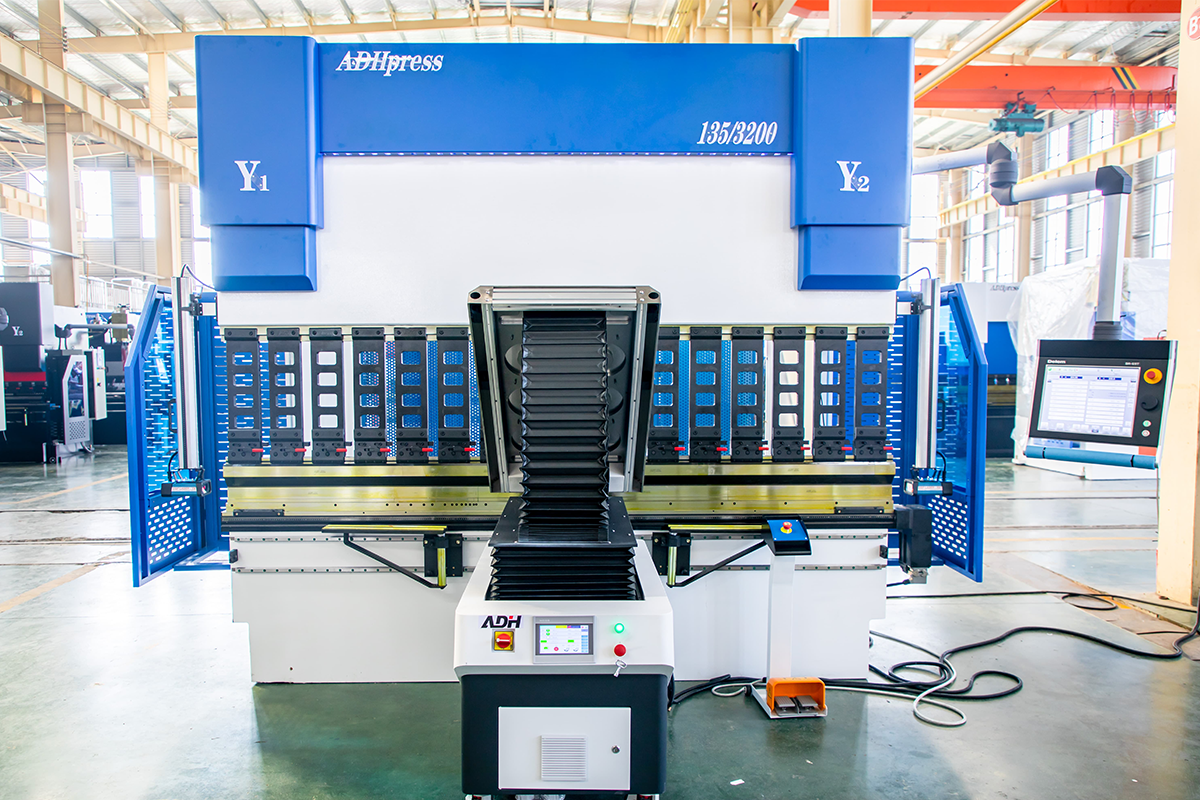
When we talk about “the largest press brake in the world,” we’re not just listing cold steel specifications; we’re talking about the human ambition of engineering pushing up against the limits of physics. In the world of heavy-duty manufacturing, these industrial giants are not only the crown jewels of a plant, but also the moat that protects a company’s core competitiveness. At this level, a machine cannot simply be “big” — it must also be powerful and precise. Modern designs such as the Large Press Brake by ADH exemplify how scale and precision can coexist harmoniously.
1.1 Three Hard-Core Metrics for Measuring an Industrial Giant
For most people, “largest” simply means physically big. From a professional engineering perspective, however, the dominance of a giant press brake must be evaluated along three interdependent, hard-core dimensions.
- Maximum Tonnage: The Nonlinear Art of Force
One of the globally recognized single-machine record holders is the Swedish-built Ursviken Optima 5000, with a maximum pressing force of 5,000 metric tons (about 5,500 US tons). What does that number actually mean? According to metal forming principles, bending force is proportional to the square of plate thickness. The force needed to bend a 20 mm steel plate is not twice, but four times that required for 10 mm. For ultra-high-strength steels commonly used in aircraft carrier decks, nuclear containment structures, or mining truck bodies (such as Hardox 500), 3,000 tons is often just the starting point. Only 5,000-ton-class hydraulic systems can truly tame these special materials with extremely high yield strengths in a cold-forming process. - Effective Bending Length: Conquering the Nightmare of Deflection
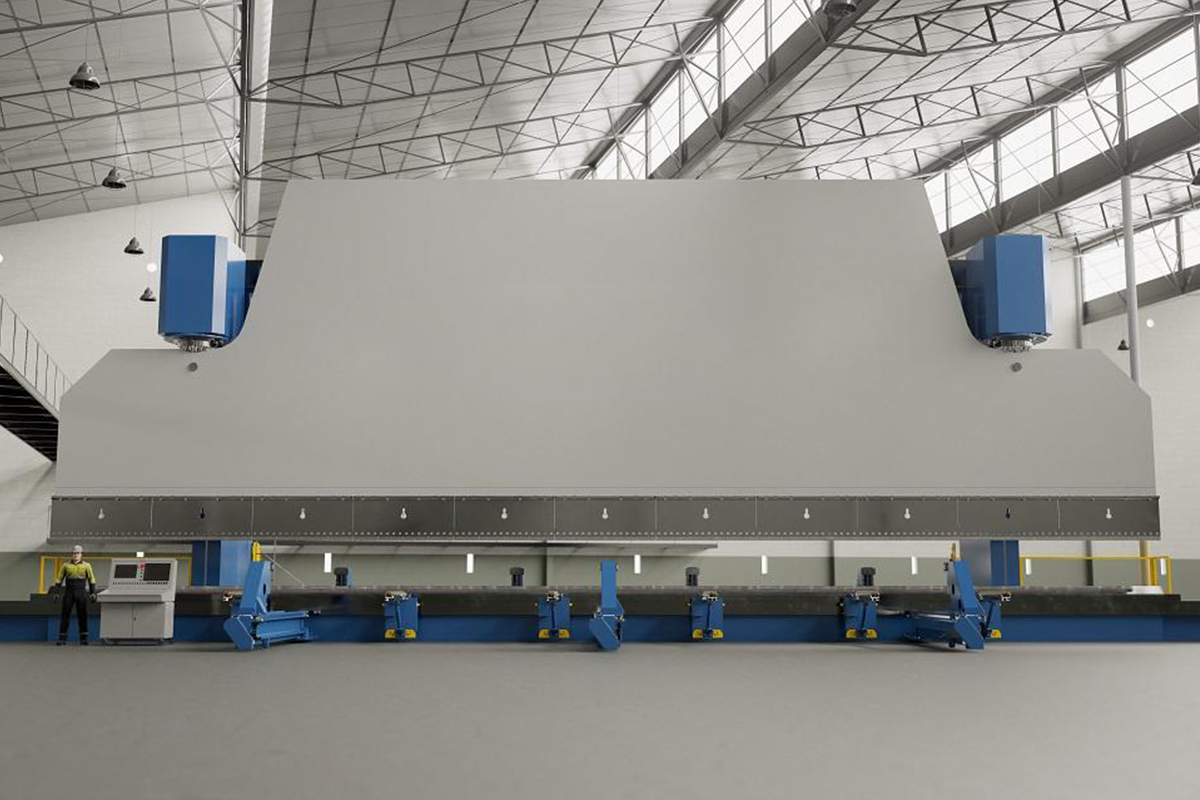
Length is another brutal dimension of the challenge. The longest press brakes in service today have a single-machine bending length exceeding 22.2 m (73 ft). But length is the natural enemy of accuracy. Apply several thousand tons of force along a ram more than 20 meters long, and the structure will inevitably flex like a bow. Without top-tier dynamic crowning technology, ultra-long parts will suffer from the “canoe effect,” where the bend angle is larger in the middle and smaller at both ends — a catastrophic quality defect for precision steel structures. - Overall Processing Capability: The Hidden Battle of Throat Depth and Foundations
A true behemoth must combine high tonnage, ultra-long bending length, and deep throat depth. To fully exploit a 22-meter bending capacity, these machines typically need a throat depth of more than 1.5 m to allow parts to swing and rotate. What’s less visible is the civil work underneath: to carry such a heavyweight, plants often need to excavate foundation pits up to 6 m (20 ft) deep. The engineering complexity of the foundation alone is comparable to constructing a small building.
1.2 The Global Elite: Current Record Holders and Technical Schools of Thought
In the global market for heavy press brakes, there are only a handful of players capable of mastering “thousand-ton class” machines. The competitive landscape is marked by distinctly different technical schools and philosophies:
| Technical School | Representative Manufacturers | Core Strengths & Technical Philosophy | Typical Application Scenarios |
|---|---|---|---|
| Nordic Apex Predator | Ursviken (Sweden) | Single-machine extremism. As a holder of the 5000T+ record, the Optima series represents the pinnacle of single-machine manufacturing capability. Their philosophy is the “fusion of raw power and ultimate precision,” excelling at extreme thick plate and armor steel processing. | Military armor, icebreaker hulls, ultra-large mining machinery |
| Tandem Masters | LVD (Belgium) / Durma (Turkey) / Bystronic (Switzerland) | Flexible tandem approach. For ultra-long parts, they favor Tandem (two-machine) or Tridem (three-machine) configurations. Through CNC electronic synchronization and linear-scale feedback, two 2000T presses can operate as one. This concept gives plants tremendous flexibility: they can run separately in normal production and “combine forces” for heavy-duty jobs. | Wind tower sections, crane booms, extra-long pipelines |
| Heavy-Duty Custom Pioneers | Cincinnati (USA) / Trumpf (Germany) | Application-specific specialization. Cincinnati is known for rugged, American-style heavy machinery, while Trumpf stands out in intelligent control and precision in the heavy segment (e.g., the TruBend 8000 series), offering deeply customized solutions for specific industries. | Aerospace structural components, heavy truck main beams |
| Chinese Disruptors | HARSLE / ADH / YAWEI | Value-driven challengers. In the 2000T–3000T range, Chinese manufacturers are reshaping the market with highly competitive offerings. While there is still a gap to Nordic makers in consistency at the ultra-extreme 5000T level, in the mid-to-high-end heavy segment their price-performance ratio is highly disruptive. | General steel structures, infrastructure equipment, shipbuilding sections |
1.3 The Cost and the Payoff of “Big”: The Underlying Logic of Heavy Manufacturing
When a company spends several million — or even over ten million — US dollars on these giants, and is willing to rebuild an entire workshop around them, the business logic goes far beyond bragging rights.
1) Process Substitution Revolution: 6.4× Improvement in Fatigue Life
This is the most critical “hidden variable” in ROI calculations. Heavy structural components (such as crane booms) have traditionally been fabricated by welding plates together. However, welding creates a heat-affected zone (HAZ) that reduces hardness and introduces significant residual tensile stress. Studies show that the fatigue life of a cold-formed (bent) beam is at least 6.4 times that of a welded beam. For components subjected to high-cycle fatigue loads — like mining truck chassis or mobile crane frames — replacing welds with bends is not just a process upgrade; it is the ultimate solution to cracking risks and a cornerstone for full life-cycle structural safety.

2) Catalyst for New Materials: The Only Practical Way to Tame Hardox/Weldox
As construction and heavy equipment move aggressively toward lightweight design, Hardox (wear-resistant steel) and Weldox (high-strength steel) are used extensively. These materials are notoriously difficult to form: they exhibit large springback and demand strict control over die V-opening (typically 10–12× the plate thickness). This means that bending a 20 mm Hardox plate requires a massive die with a 200–250 mm opening. Conventional presses lack both the daylight (open height) to mount such dies and the tonnage to overcome their very high yield strengths.
Owning a world-class Large Press Brake is essentially a ticket into the high-end heavy equipment arena. It draws a clear technological red line: on one side lies the red ocean of price-driven competition; on the other, a blue ocean where you command pricing power.
II. Engineering Marvels: Breaking Physical Limits Through Core Technologies
Building a heavy-duty press brake is not the hard part; the real challenge is making a multi-thousand-ton steel colossus run with the precision of a Swiss watch. Once bending forces exceed 3,000 tons and the working length stretches beyond 20 meters, traditional mechanical design “rules of thumb” start to break down. At this scale, engineers are effectively playing a high-stakes strategy game with materials science, fluid dynamics, and control theory.

2.1 Taming Tens of Thousands of Kilonewtons: Frame Architecture and Finite Element Analysis (FEA)
In top-tier heavy press brake design, the first major hurdle is how to build a frame that can withstand extreme loads while still maintaining micron-level accuracy.
- The ultimate battle between rigidity and elasticity: the evolution of the C-frame
Although O-frame machines are inherently more stable in structural terms, the C-frame remains the dominant choice in the ultra-heavy segment. Only an open-sided design allows extra-long workpieces to move in and out laterally and supports continuous bending processes. However, the C-frame naturally suffers from throat deformation—under high load, the frame opening spreads ever so slightly, like a giant jaw opening. To overcome this physical limitation, leading manufacturers (such as Ursviken) no longer rely on simply stacking on more steel. Instead, they use finite element analysis (FEA) to simulate the frame’s dynamic behavior. By optimizing the stress flow, they shave off weight in non-critical areas while adding specially engineered reinforcing ribs in high-stress zones. The resulting, carefully calculated press beam can weigh up to 400 tons, typically fabricated from special steel plate thicker than 300 mm, followed by prolonged heat treatment to eliminate internal stresses. - Double-bed reference system: decoupling “force” from “accuracy”
This is the watershed technology that separates merely “big machines” from truly “world-class machines.” On standard equipment, the linear scale is mounted directly to a load-bearing side frame, so any deformation in the frame immediately translates into measurement errors. In contrast, top-end systems adopt a Double Bed Reference or independent measurement-frame design. Engineers install a completely non-load-bearing secondary C-frame next to the main structural frame, dedicated solely to carrying the linear scales. This means that even if the main cylinders flex the frame by 2 mm under load, the measured relative position between ram and bed can still be held within 0.01 mm. This physical separation between the “load-bearing skeleton” and the “sensory nervous system” is the foundational logic that allows heavy press brakes to achieve high-precision machining.
2.2 The pursuit of a perfect straight line: the art of deflection compensation (crowning) over long spans
When 5,000 tons of force are applied across a 22-meter ram and bed, physics dictates that both beams will elastically deflect—imperceptible to the naked eye but catastrophic for part accuracy: the ram arches upward, and the lower bed sags downward. Without compensation, the resulting part will show a classic “canoeing” effect, with a larger bend angle in the middle and smaller angles at both ends.
- Dynamic hydraulic crowning: restoring straightness
On machines of this size, traditional mechanical wedge-style crowning simply reaches its limits. The core solution is a CNC-controlled hydraulic crowning system. A series of independent high-pressure cylinders (often a dozen or even several dozen) are embedded within the lower bed. At the moment of bending, the CNC calculates the theoretical deflection curve of the ram based on material thickness, length, tensile strength, and V-die opening. The cylinders underneath then push up with pinpoint accuracy, creating a “reverse camber” that mirrors the ram’s deflection. This “fight fire with fire” approach ensures that the upper and lower tools remain perfectly parallel along the entire 20-meter contact line. - Laser closed-loop feedback: from “prediction” to “perception”
No matter how refined, theoretical calculations will always carry some error—especially when dealing with high-strength, non-homogeneous steels such as Hardox. Manufacturers like LVD therefore integrate real-time laser angle measurement systems (e.g., Easy-Form® Laser). Scanners monitor angle changes during bending at up to 100 measurements per second. The moment they detect springback or angle deviation, the system commands the Y1/Y2 hydraulic axes to make micron-level corrections within milliseconds. This effectively gives the giant press brake “tactile feedback,” delivering true what-you-see-is-what-you-get performance.
2.3 Mastering massive workpieces: automation and support systems
In heavy manufacturing, manual intervention in the actual forming process is no longer feasible. A comprehensive suite of automated support systems is not just about productivity—it is fundamental to operator safety.
- Variable Die Tooling (VDT): the “automatic transmission” of heavy press brakes
Swapping out a 20-meter heavy lower die by traditional means requires an overhead crane, can take 4–6 hours, and carries substantial safety risks. VDT (Variable Die Tooling) fundamentally changes this. It is a CNC-controlled intelligent lower-die system whose V-opening can be infinitely adjusted—typically from 40 mm up to 400 mm or more. The operator simply enters the parameters on the screen, and the die base automatically opens or closes to the required width, completing the changeover in about 2 minutes. Equally important, VDT is designed with virtually unlimited load-bearing length, eliminating the impression lines that often appear at the joints of conventional segmented dies—making it indispensable for parts with demanding surface requirements. - Heavy-duty sheet followers: intelligent support for massive blanks
When bending long sheets—often over ten meters—whether thin or medium thickness, the free-hanging portion of the workpiece will sag under its own weight, causing reverse kinking along the bend line. In high-speed cycles, the sheet can even whip like a giant lash, posing serious safety hazards. Top-tier heavy sheet followers must therefore combine enormous load capacity (several tons per arm) with extremely fast dynamic response. Using sophisticated hydraulic or servo-electric systems, they move in perfect sync with the descending ram, guiding the workpiece through a precise arc. This not only protects the surface finish but also guarantees final angle accuracy. - Modular Tower Backgauge: precision positioning over ultra-long spans
On very long machines, a traditional gantry-style backgauge beam will deflect under its own weight, undermining positioning accuracy. Giant press brakes therefore typically adopt independent tower-style backgauges. Each tower is driven by its own 3D servo axes (X, R, and Z) and moves like a standalone robot behind the bed. Even over gauging depths of several meters, the system maintains a repeatability of 0.1 mm.

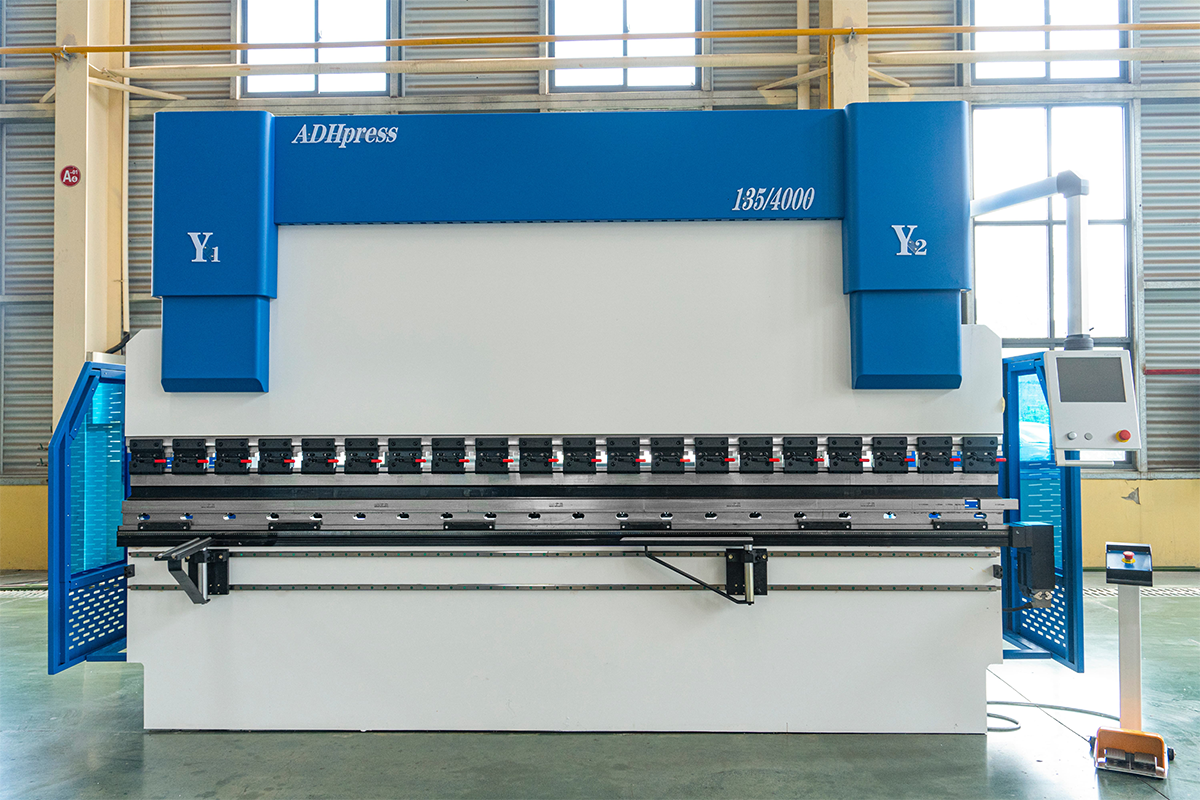
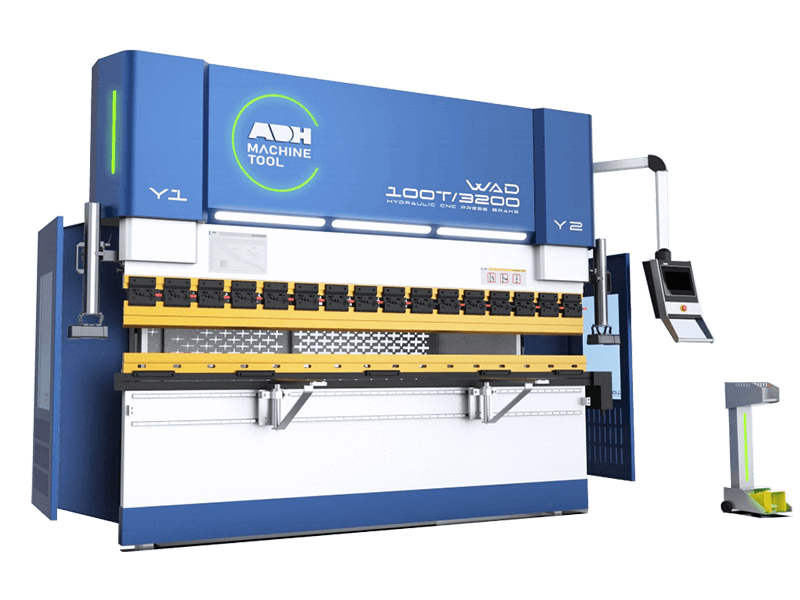
If you’re exploring automation solutions, consider ADH’s CNC Press Brake series, which integrates precision control with intelligent systems for safe and efficient production.
Ⅲ. From capability to competitiveness: turning brute force into real-world productivity
In the realm of hundred-ton to ten-thousand-ton bending forces, the capital cost of the machine itself is often just the tip of the iceberg. The true competitive edge lies in your application strategy. Owning the world’s largest press brake does not automatically confer market dominance—unless you can translate that raw power into exceptional throughput and efficiency. The following sections dissect three core application scenarios, their pain points, and the pathways to break through them.
3.1 Shipbuilding and offshore engineering
Shipbuilding has long been defined by a fundamental trade-off between the efficiency and accuracy of curved-surface forming. Traditionally, outer hull plates are shaped predominantly using “line heating,” a thermal forming process that depends heavily on the craftsperson’s experience. It is slow, difficult to standardize, and the heat input can easily degrade the mechanical properties of the steel.
- Pain point in depth: weld seam nightmares and material damage Traditional small-panel assembly methods leave the hull covered in weld seams. Every meter of weld not only means expensive filler wire and labor, but also high X-ray NDT (non‑destructive testing) costs and a heightened risk of fatigue cracking. At the same time, flame-based hot forming destroys the microstructure of high-yield-strength ship plate (such as AH36/EH36), causing local embrittlement in the material—an unacceptable hidden danger for icebreakers or deep‑sea submersibles.
- Breakthrough approach: cold forming and step-bending processes Using ultra‑large press brakes of 5,000 tons and above for cold bending is a game changer for modern shipbuilding.
- Process replacement: With CNC‑controlled step bending (bump bending/step bending), the operator performs hundreds of tiny, continuous bends to closely approximate the hull’s complex double-curvature surfaces. This fully replaces manual line heating while preserving the plate’s original mechanical properties.
- Step‑change in ROI: By using extra‑long press brakes (20 m and above) to form each panel in one shot, shipyards can eliminate a large number of fit‑up and welding operations. Field data show that this integrated forming approach can cut downstream assembly and welding time by more than 30%. With far fewer weld seams, the NDT workload can drop by about 40%, directly shortening the critical time the vessel occupies the dry dock.

3.2 Construction Machinery & Cranes (Yellow Goods & Cranes)
This is where materials are pushed to their absolute limits. Crane booms from global players like Liebherr and XCMG are engineered for extreme lightweight performance and extensively use ultra‑high‑strength steels with yield strengths above 1,100 MPa (such as Weldox/Strenx).
- Pain point in depth: unpredictable springback and cracking risk When bending wear‑resistant plate such as Hardox 450/500 or structural grades like Weldox 960, the springback angle can reach 7°–10°, and brittle fracture is very likely to occur at the bend. In addition, these hard materials cause devastating wear on the tooling, and frequent die changes can bring the entire line to a standstill.
- Breakthrough approach: intelligent compensation and variable‑die technology
- Tight control of the R/t ratio: This is the core know‑how of seasoned professionals. When processing high‑strength steels, the ratio between the inside bend radius (R) and plate thickness (t) must be strictly controlled. SSAB recommends an R/t of at least 3–4 for Hardox 450, and you must distinguish between the transverse rolling direction and longitudinal rolling direction—bending along the rolling direction is far more prone to cracking.
- Dynamic springback compensation: High‑end heavy‑duty press brakes are equipped with real‑time angle measurement systems (such as LVD’s Easy‑Form Laser or Trumpf’s ACB). During bending, the system continuously monitors springback and automatically adjusts the ram depth (D‑axis), keeping angle deviations within ±0.3° and effectively eliminating the old trial‑and‑error scrap cycle.
- Adjustable V‑die technology: To handle boom plates of different thicknesses, CNC‑controlled adjustable V‑dies are a must. Instead of lifting and swapping out multi‑ton dies, the operator simply enters the parameters on the controller and the V‑opening adjusts automatically within seconds (typically set to 8–12 times the plate thickness). This compresses what used to be hours of die‑change downtime into about 2 minutes.
3.3 Energy & Infrastructure (Infrastructure & Wind Power)
Whether we are talking about offshore wind towers or UHV transmission poles, their defining features are “large, long, and thick.” In this sector, the real battleground is the flexibility of your production line.
- Pain point in depth: demand volatility and idle capacity Production demands are highly uneven: in normal times, you may process 6–12 m standard poles, while during peaks you suddenly need to handle 20 m or even longer monopiles for offshore wind or bridge box girders. If you simply buy a 24 m giant press brake, half the machine will sit idle whenever you run short parts, resulting in massive CAPEX waste.

- Breakthrough approach: the tactical flexibility of tandem systems
- Seamless split‑and‑merge strategy: Deploying tandem systems with two or more linked press brakes has become standard practice. For example, you can install two 12 m, 2,000‑ton machines side by side.
- Normal mode: The two machines operate independently, each with its own crew processing shorter parts, effectively doubling throughput.
- Peak‑demand mode: A CNC synchronization system locks the two rams together so they operate as a single unit, enabling the bending of workpieces up to 24 m long.
- JCO forming process: For ultra‑thick plate (40 mm and above) used in wind monopiles, the J‑C‑O three‑step forming process is applied. The plate is first bent into a J shape, then flipped and bent into a C, and finally closed into an O. Compared with traditional three‑roll bending, this method offers unmatched accuracy when working with thick and high‑strength materials and eliminates the need for expensive roll sets for each pipe diameter.
- Seamless split‑and‑merge strategy: Deploying tandem systems with two or more linked press brakes has become standard practice. For example, you can install two 12 m, 2,000‑ton machines side by side.
💡 Insider’s Note: When investing in ultra‑large press brakes, do not focus solely on the machine itself—the complexity of the handling and logistics system is just as critical. A 20 m‑long machine can easily weigh more than 400 tons and imposes extremely strict requirements on foundation settlement. The more immediate challenge, however, is this: how do you safely feed a 20 m‑long, 20‑ton plate that whips like a giant steel lash during bending? For this reason, heavy‑duty sheet followers are not a nice‑to‑have option, but an essential safeguard for both operator safety and surface quality.
Ⅳ. Strategic Decision: Do You Really Need the “World’s Biggest”?
At the very top of the industrial manufacturing pyramid, buying the “world’s largest” press brake is anything but an ordinary equipment purchase. It is a capital bet on your competitive position for the next decade. At this scale, a wrong decision does not just tie up capital—it can mean missing an entire strategic window of opportunity. The following framework is a deep decision model drawn from the perspective of senior industry consultants and lean‑manufacturing practice.
4.1 ROI and TCO: The Reality Below the Waterline
Many corporate decision‑makers focus only on the ex‑works price printed on the quotation, while ignoring the vast “iceberg” of costs hidden below the surface. For ultra‑heavy equipment, the logic behind TCO (total cost of ownership) is fundamentally different from that of standard machine tools.
Explicit vs. Hidden Costs (The Iceberg Model)
Post‑mortem analyses of large‑scale heavy‑manufacturing projects worldwide show that the life‑cycle cost structure of a giant press brake typically looks like this:
- Machine itself (~40%): This is the contract value you can actually see—but it’s only the price of admission.
- Civil and infrastructure works (~30%): This is the most underestimated money pit. For presses above 2,000 tons, the pit depth typically needs to reach 3–5 meters, and high‑grade reinforced concrete with vibration control is mandatory. The more painful challenge is getting a machine weighing several hundred tons into the building: you may have to remove half the workshop roof or spend a small fortune reinforcing existing crane girders to handle the load.
- Heavy‑duty tooling and consumables (~20%): Heavy press tools are not just chunks of steel; they are precision instruments with sophisticated heat treatment. A set of variable V‑die tooling optimized for Hardox wear plate often costs as much as a standard mid‑size press brake.
- Logistics and compliance (~10%): Out‑of‑gauge (OOG) transport comes with route survey fees, bridge crossing fees, traffic control and escort costs, plus temporary heavy‑duty road mats to get the low‑bed trailer into your plant. Add up all these “miscellaneous” items and the total is usually eye‑watering.
The energy black hole and the hybrid solution
Conventional hydraulic giants are genuine power hogs: the main pump motor is circulating thousands of liters of oil at full speed even in standby. Under today’s energy prices and carbon‑emission regulations, servo‑hydraulic hybrid systems are no longer a nice‑to‑have option; they are a mandatory baseline for any new press in the 3,000‑ton class and above. By using a servo motor to directly drive the pump and provide “power on demand,” field data show energy savings of more than 50%. Just as important, lower oil temperatures can triple the service life of expensive anti‑wear hydraulic oil, significantly cutting maintenance costs.
4.2 The technology fork: Single Giant vs. Tandem System
This is the decision that keeps technical directors and plant managers awake at night. It’s not just about price; at its core, it’s a philosophical battle between maximum rigidity and maximum flexibility.
Single Giant: absolute rigidity
- Key advantage: Unmatched center‑loading capability. When you need to bend ultra‑thick plate or very high‑yield armor steel at the dead center of the machine, the structural integrity of a monoblock frame delivers minimal deflection and the highest possible accuracy.
- Critical weakness: Any unplanned downtime takes your entire plant capacity to zero. And when you’re running short parts, dozens of meters of machine bed are sitting idle—an enormous waste of capital (CAPEX waste).

Tandem system: a capacity multiplier
- Key advantage: Extremely high ROI. In day‑to‑day operation the two machines “split up” and run independently (for example, processing 6‑meter parts). When big jobs come in, they “merge” into a tandem system to tackle 12‑meter components. This flexibility aligns perfectly with volatile and unpredictable demand.
- Hidden trap: throat depth limitation. This is the technical blind spot salespeople rarely mention. Where the two tandem presses meet, there is a physical upright. If the workpiece width exceeds the throat depth (typically 500–1,000 mm), the plate will not pass the column and the job simply cannot be done. Unless you budget for a custom throat depth of 1,500 mm or more, this can become a major process bottleneck.
- Synchronization risk: A tandem setup relies on a master‑slave protocol for synchronization. If there’s even a microsecond‑level delay in encoder feedback or hydraulic response, the resulting shear forces can instantly tear the workpiece—or even cause structural damage to the machine.
| Decision Dimension | Single Giant Machine | Multi-Machine Tandem System | Recommended Application Scenarios |
|---|---|---|---|
| Machining Accuracy | ⭐⭐⭐⭐⭐ (Extremely high) | ⭐⭐⭐⭐ (Depends on synchronization algorithms) | Nuclear containment structures, military armor, high-pressure vessels |
| Equipment Utilization | ⭐⭐ (Often idle) | ⭐⭐⭐⭐⭐ (Highly flexible combination and allocation) | General steel structures, light poles, construction machinery booms |
| Load at Center | ⭐⭐⭐⭐⭐ (Extremely robust) | ⭐⭐⭐ (Limited by connection points) | Wear-resistant plates for mining machinery, crusher housings |
| Investment Threshold | ⭐⭐⭐⭐ (Very high) | ⭐⭐⭐ (Relatively lower) | - |
4.3 The supplier “Kill List”
Before you sign that multi‑million‑dollar contract, sit down with this checklist and interrogate your supplier. If they are vague or evasive on any one of these points, you should walk away.
Turnkey capability
- Key question: “Who issues the foundation drawings? Who is responsible if there is foundation settlement?”
- Pitfall to avoid: Many agents only “sell iron.” By the time the machine arrives, you may discover the pit is 100 mm too shallow or the anchor bolts were cast in the wrong position. Rework can cost hundreds of thousands and delay the project for weeks. You must insist on a genuine turnkey package that includes civil‑works guidance.
Depth of local after‑sales support
- Key question: “If the main cylinder seal kit blows, will you fly someone in from Europe, or do you have local inventory and senior technicians?”
- Pitfall to avoid: Replacing seals on a giant cylinder is heavy, complex work that requires special fixtures and lifting equipment. Without a professional local team, a minor oil leak can shut you down for a month—catastrophic if it happens in peak season.
Simulation strength of the software ecosystem
- Key question: “Can your offline programming software accurately simulate springback for Hardox 500?”
- Pitfall to avoid: For a 20‑meter heavy‑duty workpiece, trial‑and‑error is ruinously expensive—scrapping a single plate of special steel can cost tens of thousands. Your companion software (Radbend, AutoPOL, or an OEM‑developed system) must have robust finite element (FEM) capability to accurately predict springback angles and collision risks on screen. Don’t let operators gamble on a machine worth tens of millions; let them validate the process in a digital twin first.
Ⅴ. Implementation: a practical playbook from purchase to production
When you’ve just signed a contract worth several million dollars and watch the salesperson leave with a big smile, stay clear‑headed: the real battle is only beginning. Between a perfect paper proposal and a machine roaring on your shop floor lie countless “sinkholes” that can delay—or even sink—the entire project. For this class of mega‑tonnage industrial giant, execution on the ground is often harder than building the machine itself.
5.1 Infrastructure Works: The Most Underrated Challenge
Many corporate decision-makers fall into a dangerous misconception: they think buying a press brake is like buying a refrigerator—plug it in and start using it. In reality, bringing in an ultra-heavy press brake rated at 3,000 tons or more is essentially a highly complex civil engineering and logistics project.
Foundation nightmares: not just load-bearing, but waterproofing and vibration isolation Ultra-large press brakes typically require a pit 3–6 meters deep to accommodate the long stroke of the hydraulic cylinders. At these depths, you are very likely to cut into the local groundwater table.
- Nuclear-grade waterproofing: If you build the pit’s waterproofing to ordinary building standards, there’s a good chance that six months later it will have turned into a “fish pond,” and your high-value servo hydraulic valve manifolds will start rusting rapidly in the damp environment. You must use a containment design with high-grade concrete and waterproofing, at least to swimming-pool standards—and in some cases to nuclear-plant standards.
- The art of vibration isolation: When 3,000 tons of force is released in an instant, the resulting shock wave travels through the foundation in all directions. Without professional vibration isolation design (for example, installing specialized isolation pads such as Unisorb or Vibro/Dynamics), nearby high-precision equipment like laser cutters or CMMs (coordinate measuring machines) can start throwing frequent errors—or worse, quietly generating scrap.
- Settlement monitoring: During the first year under load, a new foundation will inevitably undergo small but measurable settlement. Smart plant managers embed settlement monitoring points at critical locations in the foundation and recheck and level the machine monthly during the six months before full production. If you don’t, minor distortions in the foundation will be transferred straight into the machine bed, causing permanent loss of accuracy.
The “last mile” of logistics
- The extreme challenge of out-of-gauge (OOG) transport: A 20-meter machine frame is typically shipped in sections, but each section can still weigh more than 100 tons. Many older plants have access roads with inadequate turning radii or workshop doors that are too low. A route survey is mandatory. In real-world projects, it is not unusual to see workshop doors temporarily dismantled—or even roofs partially removed—just to get the beast inside.
- The in-shop “upending” problem: The machine is usually delivered lying on its side. How do you safely upend a 200-ton component in a building with limited headroom? This normally requires two high-capacity overhead cranes working in perfect coordination (one picking the tail, one as the main lift). If your overhead cranes are undersized, you may have to bring in a mobile hydraulic gantry system—and pay handsomely for it.
5.2 Safety and Ergonomics: Physics Doesn’t Negotiate
When you are handling steel plates that are tens of tons in weight and over ten meters long, even a small mistake can turn into a fatal accident. Here, safety is not just about compliance—it is literally about survival.
Lethal hazard: sheet whipping
- Energy release: At the instant bending is completed and the ram starts to rise, the elastic energy stored in high-strength steel is released almost instantaneously, causing the plate edge to spring up violently (whip-up). If an operator happens to be standing in the path of that movement, the force can be fatal.
- Mandatory protection: Conventional light curtains are often ineffective in this scenario, because the plate itself blocks the beams. On ultra-heavy machines, sheet followers are not a nice-to-have option—they are essential. They support and move with the plate, physically eliminating the whipping risk. At the same time, you must clearly mark a “red zone” on the floor and treat it as a lethal hazard area: absolutely no one is allowed within 3 meters of the plate during bending.
Operator training: from “button pusher” to process specialist
- Skill leap: A conventional press brake operator only needs to read drawings and enter bend angles. An ultra-heavy press brake operator, by contrast, must understand basic materials mechanics. They need to identify the rolling direction of Hardox or similar plates (transverse vs. longitudinal) and choose the correct die opening accordingly, to avoid chipping the tooling or cracking the plate.
- Cockpit-style teamwork (CRM): Bending a 20-meter part usually requires a team of 2–3 people. Who controls the foot pedal? Who monitors the backgauge? You need a strict call-and-response procedure, similar to cockpit crew resource management in aviation: only after the lead operator has heard every assistant clearly confirm “safe” may they press the foot switch.

5.3 Maintenance and Full Lifecycle Management
Despite their rugged appearance, these giant machines are full of extremely delicate systems. Your maintenance philosophy must shift from “fix it when it breaks” to genuine predictive maintenance.
“Blood dialysis” for the hydraulic system
- New oil ≠ clean oil: Never assume that fresh, factory-sealed hydraulic oil is clean. Its ISO cleanliness level is typically around 20/18/15, which is far below the 16/14/11 recommended for servo and proportional valves.
- Kidney-loop filtration: When filling a new machine, the oil must first pass through a high-precision filtration cart. Once in production, it is strongly recommended to install an offline bypass filtration system that runs 24/7, filtering the oil continuously—just like blood dialysis. This is the only reliable way to prevent valve spools from sticking and to extend the life of expensive hydraulic components.
Recalibrating geometric accuracy
- Thermal effects: Ultra-large machine tools are extremely sensitive to temperature. The bending angle in a cold start during the morning shift can differ from the hot condition in the afternoon by as much as 0.5°. Advanced users build a “temperature compensation table” and automatically compensate the ram depth (D-axis) based on hydraulic oil temperature.
- The one-year check-up: Foundation settlement generally stabilizes about one year after start-up. At that point you must bring in the OEM’s service engineers with a laser interferometer to re-level the entire machine and recheck squareness. This step is crucial: it determines whether, for the next twenty years, your press brake remains a precision tool—or degenerates into a brute-force workhorse fit only for low-accuracy jobs.
Ⅵ. The World's Largest Press Brake
6.1 Overview of the Largest Press Brakes Globally
Until 2023, Ursviken Technology has sold the industry's biggest press brake ever produced. This machine is famous for its tremendous size and advanced function, which proves the technology innovation in the metal manufacturing sphere.
The world's largest press brake not only showcases cutting-edge engineering technology but also highlights the globalization of the manufacturing industry. Although the machine is made in Sweden, it has impacted the entire world, including the United States, which has advanced and powerful manufacturing equipment.
Bending Force and Bending Length
Its bending force is 5000 tons, and its bending length is 73 ft, making it very easy to handle highly demanding bending tasks. The machine is capable of processing materials up to 320mm in thickness. The advancement of the press brake not only lies in its size but also improves its ability to bend larger and thicker metal sheets.
Advanced Automation Systems
A standout feature of this press brake is its cutting-edge automation systems, which boost its performance and efficiency. It includes automatic upper tool changes, allowing the machine to switch tools quickly and precisely without manual intervention.
This capability increases production efficiency, particularly when multiple tooling configurations are required for a job. Additionally, it features variable die tooling, allowing the machine to handle various metal thicknesses and shapes. This versatility ensures optimal bending results across a wide range of workpieces.
Programmable Front and Backgauges
The press brake is equipped with programmable front and backgauges, ensuring accuracy and streamlined operations. These gauges play a crucial role in positioning and aligning the metal sheet during the bending process.
By automating the positioning, the system reduces human error and ensures that each bend is made at the exact intended location. The ability to program the gauges with precision, including the use of multiple axes, enhances the machine’s capacity to produce complex geometries and meet tight tolerances.
Hydraulic and Power Systems
The press brake relies on a highly advanced hydraulic system to generate and control the immense bending force required for large-scale metal forming. The system includes high-performance pumps, cylinders, and valves that work together to deliver consistent and smooth force, ensuring accurate and controlled bending.
Advanced power control technologies ensure optimal operation under varying loads, improving overall energy efficiency.
Tooling and Customization
The press brake is highly flexible in terms of tooling and customization, supporting a wide range of tooling configurations, including V-shaped dies, rib dies, and specialized tools for custom shapes.
The upper die can be configured with various widths, making it adaptable for different types of metal workpieces. This flexibility allows for the fabrication of highly specialized components, meeting the specific needs of industries such as aerospace, automotive, and heavy equipment manufacturing.
Structural Integrity and Robust Construction
Despite its size and weight, the press brake maintains structural integrity under high-force operations. Its frame is constructed from high-strength materials and engineered to withstand the stresses of heavy-duty metal forming.
This robust design ensures the machine remains stable and precise, even under extreme pressure, making it a reliable tool for industries that require continuous, high-volume production.
Sophisticated Control Systems
The press brake is equipped with state-of-the-art control systems for precise monitoring and adjustments during operation. Integrated with the hydraulic, power, and automation systems, these controls provide real-time feedback and enable operators to fine-tune the bending process.
Advanced CNC (Computer Numerical Control) technology ensures high accuracy and repeatability, even when handling complex or large-scale projects.
6.2 Discussion on the Manufacturers
Ursviken’s press brake combines unmatched size, advanced automation, energy efficiency, and customization capabilities, offering a comprehensive solution for large-scale industrial tasks. While competitors like Trumpf and Amada excel in specific areas such as precision or reliability, their machines often lack the scale and versatility required for tasks demanding extreme bending lengths and force capacities.
Ⅶ. The Economic Impact of Big Press Brakes
7.1 Cost-benefit Analysis for Businesses
Initial cost investment: purchasing a large press brake requires a significant initial investment. The cost includes purchasing, transporting, installing, and training workers.
Operation cost: the cost of a large press brake may include energy consumption, routine maintenance, component replacement, and probably technology advancement.
Production efficiency improved: the press brake can significantly improve production efficiency and reduce production time, and human labor, especially under the circumstance of mass production.
Quality improved: improving the production quality can reduce waste rate, reduce maintenance and replacement costs, and increase market competitiveness.

7.2 ROI Considerations
Improve production ability: the large press brake can handle larger materials and offers more extensive market opportunities, including the ability to accept big projects.
Market competitive advantage: the large press brake can make the enterprise, which can offer larger-scale and higher quality products, more competitive, appealing to more customers, and increase market share.
Long-term profit increasing: although the initial cost is high, the large press brake can bring consistent and increasing profit to the enterprise in the long term through improving production efficiency and quality.
Technology leadership: investment in the advanced large press brake also means the enterprise is a leader in the technology, which is a critical competitive advantage of the fast-changing market.
Ⅷ. Environmental Impact and Energy Efficiency
8.1 Environmental Considerations in the Operation of Large Press Brakes
Energy consumption: due to its scale and operation intensity, the large press brake usually consumes much energy. Therefore, lowering energy consumption is the key to reducing the environmental impact.
Emission control: although the press brake itself may not emit pollution. However, producing energy used during its operation may generate carbon dioxide and other greenhouse gas emissions. Therefore, cleaning energy or improving energy efficiency is an important way to lower the overall environmental influence.
Noise pollution: the large press brake may generate a lot of noise during operation. This may not only impact the operator's working environment but also disturb the surrounding environment.
Resource utilization and waste management: during the process of press brake manufacturing and maintenance, what should be noticed is the choice of material and the waste handling to reduce resource waste and environmental pollution.
8.2 Energy-efficient Technologies and Practices
Energy-saving design: the modern large press brake increasingly adopts energy-saving design, such as using high-efficiency motors and pumps and optimizing the control system to reduce energy consumption.
Renewable energy technology: some press brake designs include energy-renewable technology, such as recovering energy from other operation processes during the bending process.
Intelligent control system: the large press brake can operate more precisely through a high-level control system, which can reduce energy waste, such as controlling the pressure and movement speed through precise control, which can not only improve efficiency but also lower consumption.
Regular maintenance and optimization: regular maintenance and optimizing the machine can ensure it is in good condition and reduce unnecessary energy consumption.
Using clean energy: if possible, electricity using renewable resources (like solar energy and wind energy) can greatly decrease the environmental impact of the large press brake.

IX. Conclusion
The biggest press brake in the world symbolizes the superior ability in modern manufacturing. Its importance not merely lies in size but proves the human intelligence and persistent pursuit of the industrial process and efficiency and precision.
Our company, ADH Machine Tool, has specialized in producing press brakes for over 40 years. Welcome to browse our official website for knowledge learning or professional consulting, and explore our CNC Press Brake and Large Press Brake models designed for diverse industrial needs. For further inquiries, please contact us.
X. FAQs
1. What are the key specifications of the largest press brake in the world?
The largest press brake in the world has a bending force of 5,500 tons (approximately 5,000 metric tons) and a bending length of 73 feet (22.3 meters). This massive machine features advanced automation, including automatic upper tool changes and variable die tooling, allowing for a wide range of die openings.
It is equipped with fully programmable front and backgauges for precise material handling, ensuring accuracy in bending. The machine is capable of bending large and heavy workpieces, with automated systems minimizing manual handling.
2. Who designed and manufactured this press brake?
The largest press brake in the world was designed and manufactured by Ursviken Technology, a company based in Skellefteå, Sweden.
3. What makes this press brake unique in terms of advanced features?
The world's largest press brake is unique due to its advanced features that optimize performance, precision, and efficiency. These include automation technologies like automatic upper tool changes and variable die tooling, fully programmable front and back gauges, and integration of cutting-edge CNC technology for precise control.
Its massive bending force of 5,500 tons and 22.2-meter bending length enable handling of extremely large and heavy workpieces.